
Shopping Cart

Learn how to assess timber stability, scale, joinery, and antique finishes when curating handcrafted solid wood cabinets and sideboards for contemporary or traditional homes.
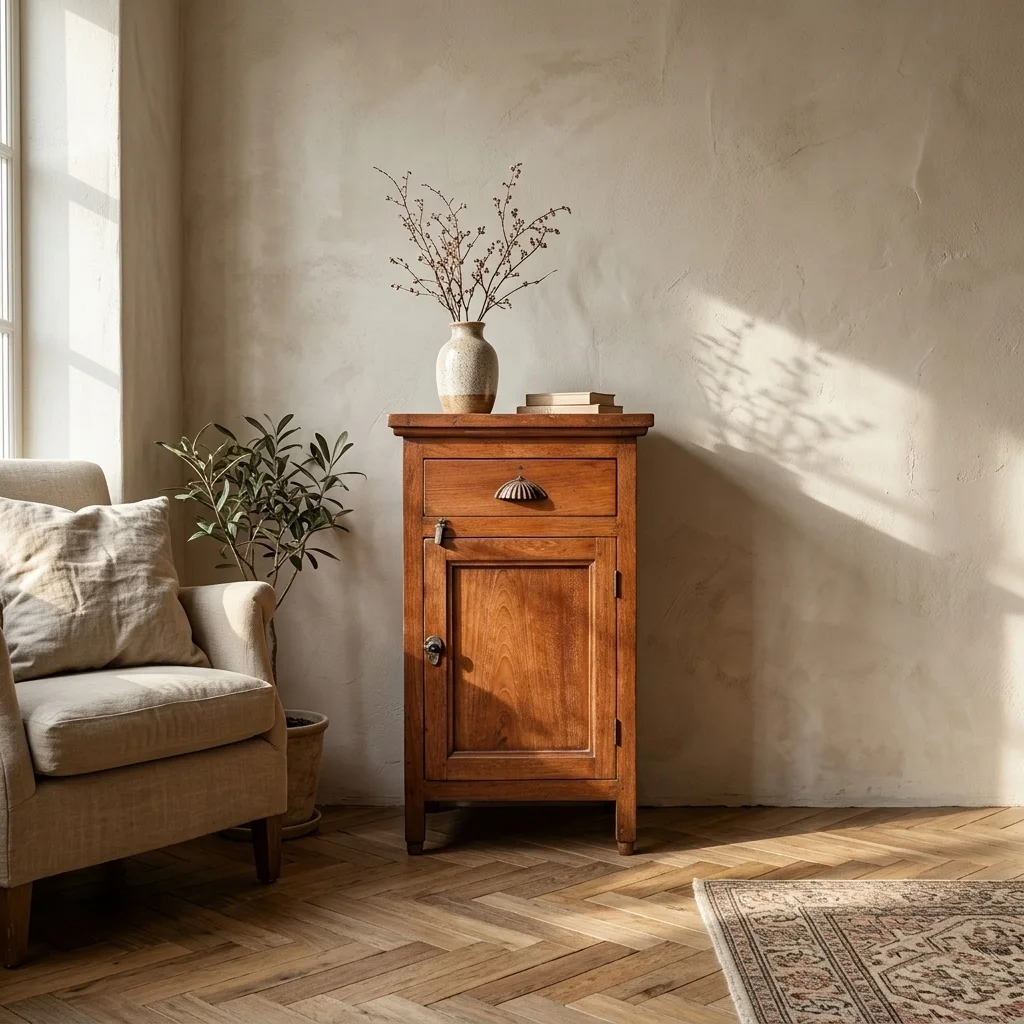
In an era dominated by flat-pack composite boards and synthetic veneers, selecting genuine handcrafted solid wood cabinets represents a deliberate return to substance, tactile history, and permanence. Unlike mass-manufactured cabinetry engineered for planned obsolescence, a cabinet shaped by skilled hands in dense hardwood carries subtle tool marks, organic grain drift, and joinery traditions honed over centuries. Whether you are furnishing a minimalist loft in London, an open-concept coastal residence in Sydney, or a classic townhouse in New York, a standalone wooden cabinet serves as both an indispensable utility and a grounding sculptural anchor.
However, introducing artisan woodwork into a home requires more than simply finding an attractive exterior. Handcrafted solid timber interacts dynamically with its environment. Choosing the right piece demands an understanding of proportions, construction integrity, atmospheric acclimatisation, and how rich textures converse with your existing architecture. This guide outlines the essential architectural and technical criteria for sourcing cabinets and sideboards that endure across generations.
The most common misstep when buying freestanding case goods is misjudging volumetric scale. A cabinet does not merely occupy square metres on a floor plan; it claims three-dimensional mass, shifts ambient light, and directs the visual rhythm of an entire room.
Standard dining room credenzas typically run between 45 cm and 55 cm (18 to 22 inches) in depth, providing ample surface area for serving platters and internal space for standard dinnerware. In contrast, entrance halls, transitions, and narrow gallery spaces require shallow-profile pieces—generally between 30 cm and 38 cm (12 to 15 inches). Choosing a cabinet that is too deep interrupts transit lines and makes rooms feel choked. Before committing to a piece, map its perimeter on the floor using masking tape, taking care to factor in full door-swing radiuses and drawer extensions.
Rooms with low ceilings or limited natural illumination benefit from pieces with elevated plinths or slender leg profiles, which allow sightlines to continue beneath the carcass, preserving a sense of open floor area. Conversely, rooms featuring soaring ceilings, historic crown moulding, or exposed brick can support heavy, ground-anchored plinths without feeling visually overburdened. Incorporating pieces like the Rustic Wooden Cabinet Glass Doors introduces significant vertical presence while keeping the visual field light and airy through reflective glass panes.
A prevalent interior design misconception is that heavily textured, rustic wooden furniture belongs exclusively inside rustic farmhouses or heritage estates. In practice, seasoned designers frequently deploy handcrafted cabinets to inject tension and organic warmth into stark, contemporary settings.
Modern architecture frequently relies on smooth, hard materials: polished screed floors, floor-to-ceiling glazing, smooth drywall, and powder-coated steel. While clean and calming, these finishes can occasionally feel sterile. A handcrafted solid wood cabinet acts as a deliberate counterbalance. The tactile surface of hand-planed timber, coupled with weathered mineral pigments, breaks rigid horizontal planes and absorbs harsh sound reverberations.
When curating for a contemporary room, look for pieces with clean rectangular silhouettes where the character stems entirely from the wood’s natural grain or an unexpected wash of historical colour. An artisanal storage unit such as the Green Accent Wooden Cabinet brings an earthy, weathered focal point into a crisp, monochromatic scheme, delivering personality without competing with surrounding minimalist geometry.
Period properties—such as Victorian terraces, Georgian townhomes, or Parisian apartments—feature ornate cornices, picture rails, and wide-plank parquetry. These settings naturalise dense wood species, hand-carved panels, and aged iron hardware. Rather than matching timber tones exactly to flooring or architectural mouldings, aim for complementary undertones. Richly detailed storage like the Antique Cabinet, Ornate Ironwork, Rustic Wood harmonises seamlessly with heritage spaces, echoing traditional blacksmithing traditions and historical carpentry while holding its own against ornate decorative backdrops.
True longevity lies within the carcass construction. When inspecting handcrafted cabinetry, look beyond surface aesthetics and evaluate the craftsmanship that dictates structural performance over decades.
Solid wood is hydroscopic; it expands across the grain when absorbing moisture during humid seasons and contracts in dry, heated winters. Skilled joiners account for this natural movement using traditional frame-and-panel construction. Cabinet door panels should "float" freely inside grooved stiles and rails rather than being glued or nailed tightly into place. This design allows the timber to swell and shrink without splitting, warping the frame, or forcing joints apart.
Examine the connection points of the outer carcass. Look for mortise-and-tenon joints, half-lap joints, or through-dovetails. Avoid cabinets assembled primarily with hidden dowels, chipboard screws, or staples concealed beneath trim. Drawer boxes should preferably feature hand-cut dovetail joints, ensuring the drawer front cannot pull away from the sides under heavy loading. Solid timber drawer runners, waxed periodically, outlast cheap mechanical ball-bearing tracks that inevitably jam or fail after years of use.
The hardware fitted to a handcrafted piece serves as an immediate indicator of authenticity. Hand-forged wrought iron ring pulls, surface-mounted sliding bolts (aldrops), and pin hinges provide distinct character and mechanical longevity. Because these elements are hammered and finished individually, they exhibit subtle variations that age gracefully, developing their own authentic handling patina over time.
A versatile handcrafted solid wood cabinet adapts across multiple rooms over its lifespan, transitioning effortlessly between different functional roles as your household evolves.
In dining rooms, cabinets must balance display with concealed utility. Internal shelving must be structurally rigid—ideally minimum 20 mm to 25 mm solid timber—to support the weight of heavy stoneware, fine porcelain, and glassware without sagging across the midspan. Consider a piece with distinct compartments: shallow upper drawers for fine cutlery and table linens, flanked by deep cupboards for large tureens and wine storage.
Living rooms demand furniture that manages entertainment clutter while showcasing curated objects. Glazed vitrines and display cabinets protect rare art monographs, ceramic vessels, and architectural curiosities from dust while maintaining an open feel. A piece like the White Distressed Display Cabinet provides an architectural backdrop that brightens dim corners and pairs effortlessly with soft linen sofas, wool rugs, and matte walls.
Compact wooden cabinets make exceptional nightstands in rooms requiring more storage than a standard console table can provide. A well-proportioned bedside piece holds books, personal journals, and electronics neatly out of sight behind a solid panel door, maintaining a tranquil, clutter-free resting sanctuary.
To preserve your investment for future generations, maintain an environment that respects the biological nature of natural timber. Here are the cardinal rules for long-term preservation:
Choosing a handcrafted solid wood cabinet is an investment in authenticity, environmental responsibility, and structural permanence. Unlike disposable alternatives that deteriorate the moment they are assembled, solid timber furniture softens with age. The everyday bumps, handling marks, and natural light exposure do not ruin the piece; they settle into the grain, adding layers of narrative and depth to your living spaces.
By understanding wood movement, prioritising traditional joinery, and thoughtfully assessing the scale of your rooms, you can select artisan case goods that feel perfectly integrated into your home today—and treasured by the next generation tomorrow. Explore the ArtisansJodhpur collection to discover authentic, handcrafted cabinets tailored to both contemporary lifestyles and timeless architectural settings.
Browse our handcrafted Jodhpur catalog or message our workshop for exact dimensions, finish photos, and export quotes.

