Shopping Cart

In modern interior design, sleek surfaces, painted drywalls, and engineered flooring often leave a space craving soul, weight, and visual warmth. When a living space feels overly sterile or flat, standard catalog furnishings rarely solve the issue. What creates genuine comfort is contrast—the intentional meeting of soft textiles, warm ambient lighting, and authentic, patinated timber that carries an inherent story.
Authentic storage trunks, slant-top grain bins, and iron-braced coffers originating from the historic workshops of Jodhpur offer an undeniable tactile presence. Historically constructed from dense native hardwoods like Sheesham (Indian rosewood), acacia, and reclaimed architectural teak, these pieces were built to withstand generations of daily use. Today, their timeworn patinas, hand-forged straps, and distinct proportions allow them to serve as practical anchors in cozy residential interiors across North America, Europe, and Australasia.
Integrating a substantial piece of heirloom woodcraft into an existing living area requires an understanding of scale, balance, and negative space. Rather than turning your living room into an antique depot, thoughtful styling pairs raw, hand-planed surfaces with contemporary upholstery, linen drapery, and understated accents to achieve effortless visual serenity.
Before styling a wooden chest, consider its architectural form and how its profile interacts with surrounding seating, circulation paths, and sightlines. Traditional regional chests carry distinct silhouettes, each best suited for specific placements within the living room.
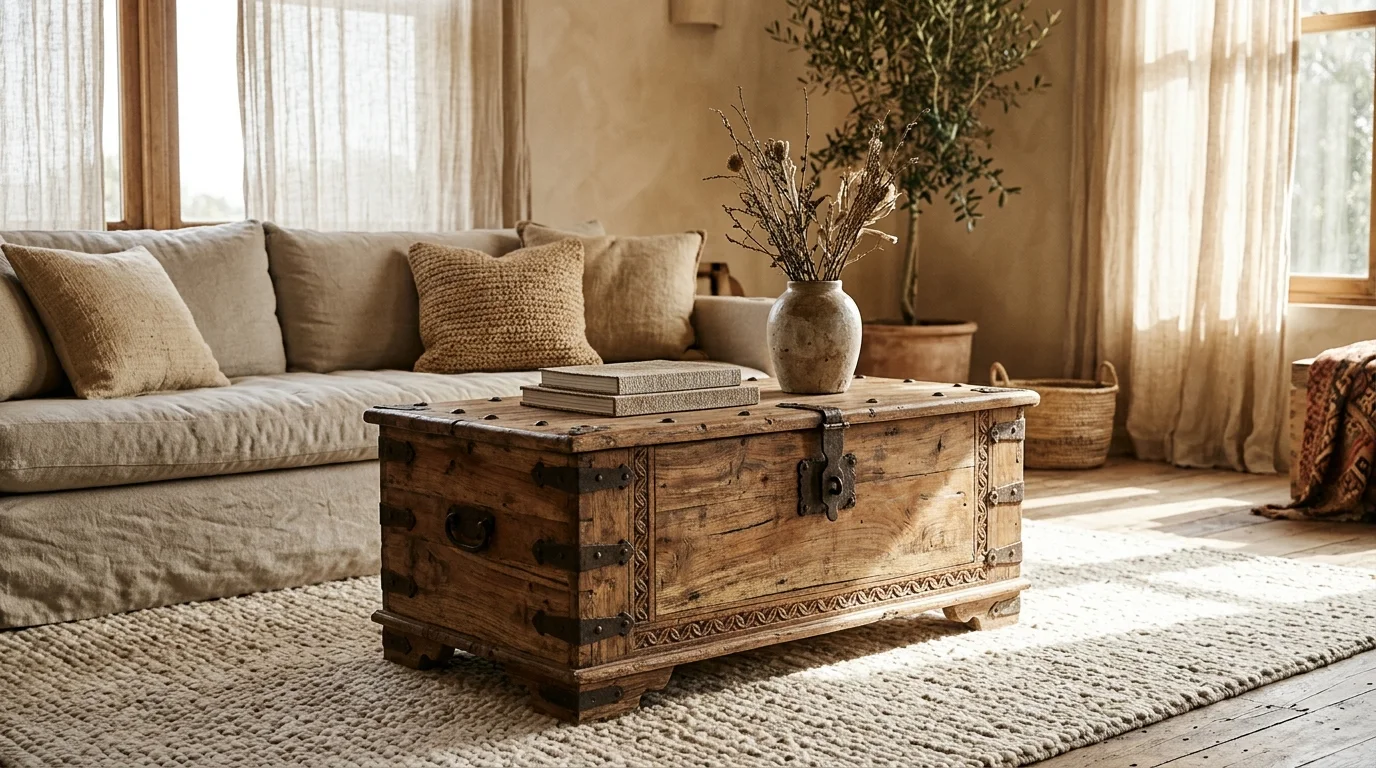
Flat-lidded trunks serve naturally as central gathering points between sofas and armchairs. A low, rectangular trunk grounds an open seating layout while functioning as fully concealed storage for seasonal throws, floor cushions, or media equipment. When opting for this arrangement, look for pieces with subtle iron strapping and clean, level surfaces. For example, a Minimalist Wooden Chest With Iron Details introduces hand-hammered joinery without feeling visually heavy or impeding the sightline between facing seats.
When measuring for a coffee-table chest, ensure the top rests roughly 2.5 to 5 cm (1 to 2 inches) lower than the crown of your sofa seat cushions. Maintain a circulation perimeter of at least 40 to 45 cm (16 to 18 inches) between the edge of the trunk and surrounding furniture to allow easy movement around the seating perimeter.
Distinctive angled trunks—historically used across Rajasthan for record-keeping, textile storage, and spice management—bring sculptural dynamism to living spaces. Their asymmetric profiles disrupt the monotonous grid of boxy modern furniture. Placing a piece like the Slant Top Wooden Chest Jodhpur against an open wall, alongside an accent chair, or beneath a low window creates an immediate conversation point. Because the slanted top prevents items from sitting flat, these chests remain clutter-free by nature, allowing the texture of the grain and hand-pegged joinery to stand unencumbered.
If your room is populated predominantly by neutral fabrics and monochromatic rugs, an antique chest featuring a weathered pigment wash introduces depth without the jarring impact of synthetic color. An Antique Wooden Chest Green Patina provides an earthy balance of sage, oxidized copper, and warm underlying timber, pairing harmoniously with neutral linen upholstery, warm limestone accents, and brushed metal floor lamps.
Styling an artisanal wooden chest is a study in complementary textures. The dense, irregular grain of historic hardwood and the dark, tactile quality of hand-forged iron require soft, organic foils to keep the living room feeling relaxed and residential rather than historic or museum-like.
Traditional Rajasthani chests frequently feature robust iron hasps, strap hinges, corner brackets, and forged carrying rings. To temper the industrial weight of pieces like the Rustic Antique Wooden Chest With Iron Hardware, surround the trunk with high-pile tactile textiles. Consider positioning the piece over an un-dyed wool flatweave, a high-pile Berber rug, or a hand-knotted jute floor covering. Drape an organic Belgian linen or washed cashmere throw over an adjacent armchair to mirror the handcrafted ethos of the woodwork.
When styling the surface of a flat-topped chest, resist the temptation to cover the timber entirely. Celebrate the natural grain, historic tooling marks, and surface variations by leaving at least two-thirds of the lid open. Arrange decorative elements using an offset vignette: a heavy ceramic or stoneware vessel filled with seasonal botanical cuttings on one side, paired with a small stack of matte-cover art monographs and a shallow brass tray for matches or candles. This preserves functional space for resting a tea mug while keeping the lid's handcrafted beauty visible.
One of the most common design dilemmas is how to pair a deeply toned, patinated antique chest with existing timber elements such as oak floors, walnut shelving, or ash dining tables. Rather than matching stains—which can make an interior look staged—aim for tonal harmony. Pay attention to undertones: pieces with warm amber, golden brown, or oxidized charcoal undertones can sit comfortably alongside pale natural oak, provided the transition is bridged with neutral textiles, clay ceramics, and muted architectural trim.
Heirloom-grade timber chests are dense, solid-core pieces of furniture. When introducing one into a modern residence or multi-story apartment, several practical structural and layout parameters should be addressed during planning.
To ensure that hand-finished and antique wooden chests maintain their luster in climate-controlled environments—especially in dry, centrally heated winter interiors common across the US, UK, and Europe—proper care is essential.
Solid tropical hardwoods naturally expand and contract in response to relative humidity fluctuations. Maintain indoor relative humidity between 40% and 55% whenever possible. Keep the chest away from direct heating registers, radiator panels, wood-burning stoves, or direct, unmitigated solar exposure, which can cause timber to dry rapidly, potentially opening seasonal hairline checks along traditional joined panels.
Avoid aerosol furniture sprays, synthetic silicone polishes, or harsh household detergents, which degrade natural finishes and leave cloudy residues on aged patinas. Instead, care for your chest twice a year using an all-natural beeswax paste polish. Apply the wax sparingly with a lint-free cotton cloth along the direction of the grain, let it rest for twenty minutes to penetrate the fibers, and buff gently with a clean horsehair brush or soft cotton cloth to produce a warm, satin sheen.
Hand-forged iron hardware should not be scrubbed with abrasive industrial rust removers. If atmospheric moisture causes slight surface oxidation on black iron straps or hinges, rub the metal lightly with a cotton rag dampened with a drop of cold-pressed mineral oil or camellia oil. This arrests oxidation while preserving the dark, historic finish of the hand-hammered hardware.
True coziness in interior design is rarely about trends; it is about authenticity, durability, and the grounding presence of materials crafted by human hands. A well-placed rustic chest does more than satisfy everyday storage needs—it serves as an enduring architectural anchor, imbuing modern homes with warmth, depth, and a connection to centuries of artisanal tradition.
Whether you are designing a compact urban reading corner or outfitting an expansive living room, explore how individual handcrafted woodwork can transform your space. Discover our broader selection of one-of-a-kind trunks, consoles, and architectural panels, or speak with our team to source tailored artisanal pieces for your upcoming residential or commercial projects.