
Shopping Cart

Discover how Marwar artisans combine hand chiseling, hand-beaten ironwork, delicate bone inlay, and multi-stage wax patinas to create enduring heirloom decor.
In the arid landscape of western Rajasthan, woodcraft has never been merely a decorative trade; it is an architectural language honed over centuries of desert living and royal patronage. Jodhpur, long celebrated as the craft heart of the Marwar region, developed a distinct furniture and decor tradition defined by resilience, monumental scale, and intricate surface detailing. Where machine-made, mass-manufactured pieces rely on computerized routers and high-build polyurethane sealers, authentic Jodhpur furniture relies on generational muscle memory, tempered steel hand tools, and natural wax finishes.
Understanding this lineage reveals why handcrafted Rajasthani decor feels intrinsically grounded. The dense local timbers—principally Indian rosewood (Sheesham), reclaimed teak, and dense Babool (acacia)—possess interlocked grain structures that demand deliberate working methods. Every deep relief motif, hand-hammered iron bracket, and weathered wax wash tells the story of an artisan responding directly to the natural character and tension of solid timber.
The visual signature of Jodhpur woodcraft begins with the hand carver’s tool kit: the chheeni (flat and gouge chisels) and the heavy wooden mallet. Unlike modern CNC machinery, which routs timber at uniform depths and leaves sterile tool paths, a master carver reads the grain line before each strike, adjusting tool angles to avoid tearing dense hardwood fibers.
Marwar carvers are renowned for acanthus leaves, stylized lotus rosettes, and scrolling vine motifs. In traditional architectural salvage and reproduction frames, artisans establish layered planes—often excavating the background timber by several centimeters so the central motifs emerge in bold three-dimensional relief. This sculptural depth creates dramatic shadows under indoor ambient lighting. Statement pieces like the Large Decorative Mirror Frame showcase this interplay of shadow and light, transforming functional wall mirrors into focal points reminiscent of Rajasthani havelis.
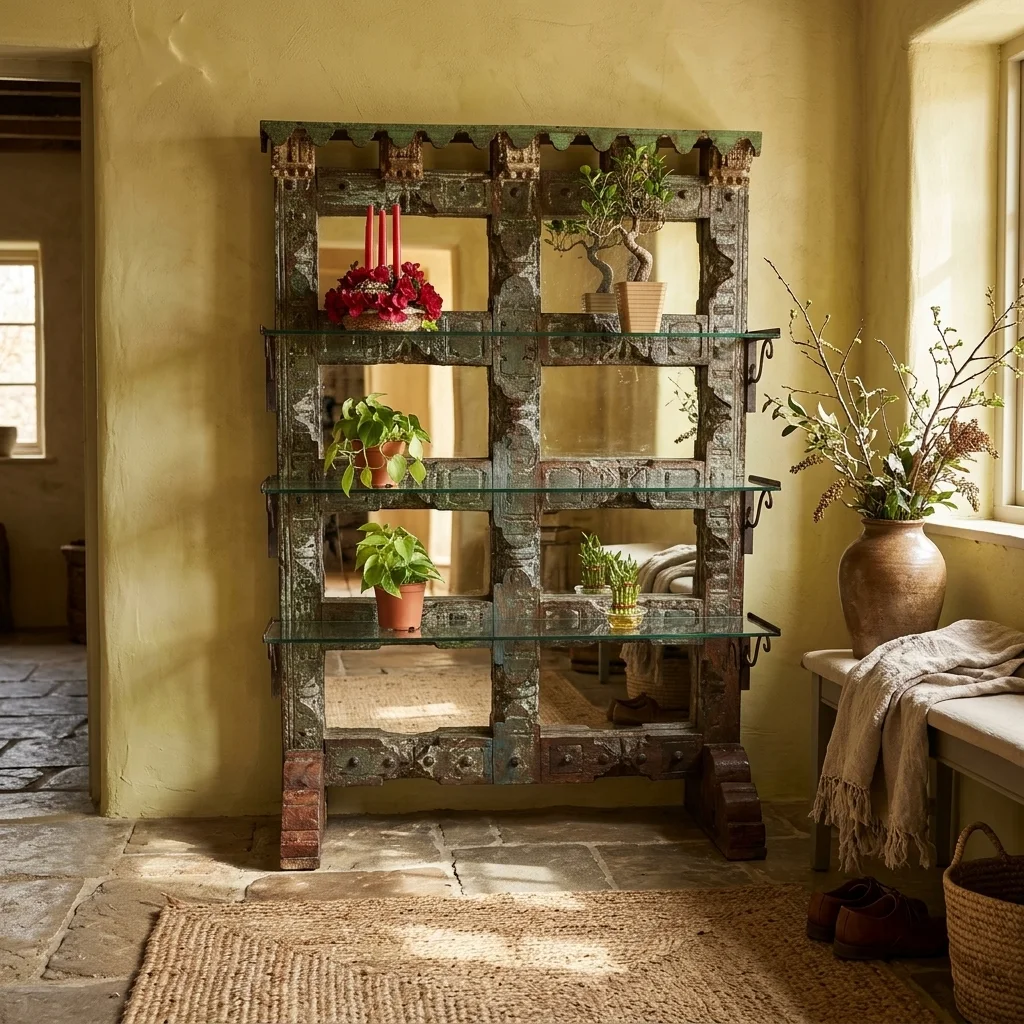
Another hallmark of the Marwari style is the jharokha, or ornate overhanging balcony silhouette, often framed with delicate jali (pierced screen) fretwork. Carvers drill starter holes and guide hand-held coping saws to cut intricate geometric stars and interlocking lattice patterns. These openwork sections originally served a practical purpose in palatial architecture: filtering harsh desert sunlight while channeling natural airflow. In interior decor, wall accents like the Carved Wooden Shelf With Mirrors incorporate these miniature architectural profiles, combining display surfaces with the iconic arched silhouettes of historic forts.
Wood and iron share an ancient relationship in Jodhpur furniture design. In the desert climate, where extreme temperature swings between scorching days and cool nights cause natural timber movement, traditional woodworkers partnered with local village blacksmiths (lohars) to stabilize expansive solid panels.
Rather than relying solely on internal dowels or modern chemical adhesives, traditional storage trunks, benches, and console cabinets use hand-hammered iron banding (patis). Blacksmiths forge mild iron over open hearths, bending strips around cabinet corners and securing them with domed, hand-peened iron studs known as gul-mikh. These fittings prevent end-grain splitting, protect vulnerable corners during transport, and impart an unmistakable rustic weight.
Hand-forged hardware extends beyond corner reinforcements to encompass heavy strap hinges, gravity drop-latches, and ring-pull handles. In functional pieces such as the Rustic Mirror With Storage Cabinet, exposed iron hinges and forged latch mechanisms complement the distressed timber, anchoring transitional spaces like mudrooms, hallways, and powder rooms with utilitarian strength.
Beyond dimensional carving, Jodhpur’s decorative repertoire includes meticulous surface ornamentation through inlay work. Originally developed under Mughal and Rajput patronage, these techniques embed contrasting materials flush with the timber surface to create mesmerizing geometric and botanical tapestries.
The final defining characteristic of heirloom Jodhpur furniture is its surface finish. Industrial factory furniture typically hides wood flaws beneath tinted clear-coats that feel plasticky to the touch. In contrast, authentic Jodhpur decor relies on multi-layer manual finishing techniques that enhance grain texture rather than encasing it.
To replicate the authentic aging seen on historic fort doors and vintage spice boxes, finishers apply a sequence of water-based pigments and mineral milk washes. A dark base coat of raw umber or walnut dye is brushed into the open pores. Once cured, secondary coats of chalk white, verdigris, or faded indigo are applied across the raised relief carvings. Artisans then manually scrub back these outer layers using wire brushes, steel wool, and pumice blocks—deliberately wearing the color away along natural touch-points, edges, and high-relief curves.
This artisanal aging method produces soft, time-mottled finishes, exemplified by the White Ornate Vintage Mirror Frame. Here, the carved borders reveal glimpses of the natural timber beneath, allowing the piece to harmonize effortlessly within contemporary coastal, Scandinavian, or modern rustic interiors.
The culmination of the finishing process is the application of hand-rubbed wax (mom polish). A blend of natural beeswax, carnauba, and mineral spirits is applied using coarse cotton rags and worked deeply into the wood fibers. Once the carrier solvent flashes off, the piece is buffed vigorously by hand with dry flannel cloth. This creates a soft, tactile, low-sheen satin luster that feels warm beneath the fingertips, repels ambient moisture, and develops a richer patina as the wood continues to age in your home.
Incorporating substantial, carved Indian furniture into contemporary international residences does not require an entirely bohemian or traditional aesthetic. In fact, these pieces function best as grounded focal points within clean, architectural spaces.
Entryways set the narrative tone for an entire home. A standalone piece like the Decorative Hall Stand With Mirror merges vertical mirror reflection with carved architectural brackets and practical drop-zone storage. Flanked by minimalist plaster walls and soft, directional uplighting, the deep carvings and patinated timber create an immediate, tactile sense of welcome.
Modern residential interiors often feature an abundance of hard, reflective surfaces: polished concrete floors, floor-to-ceiling glass, quartz countertops, and drywall. An intricately carved wooden wall mirror or rustic storage cabinet breaks visual monotony by introducing organic warmth, rough-sawn grain, and undulating hand-carved textures that soften acoustic reverberation and humanize open-concept floor plans.
Because authentic Jodhpur furniture is constructed from genuine solid hardwoods rather than engineered MDF or veneer, it breathes and adapts to changes in relative humidity. When exporting these pieces to North America, Europe, or Australia, simple maintenance protocols will preserve their structural integrity for decades:
Every hand-chiseled curve, beaten iron bracket, and hand-rubbed wax surface represents an unbroken chain of regional craft knowledge. In an era dominated by uniform, disposable consumer goods, investing in traditional Jodhpur woodcraft is an intentional choice: it supports skilled rural artisans, preserves tangible cultural heritage, and introduces pieces of undeniable soul and permanence into modern residential and commercial spaces.
Whether you are an architect specifying one-of-a-kind statement portals for a boutique hotel or an interior designer curating a welcoming entryway, ArtisansJodhpur provides direct access to authentic Rajasthani craftsmanship, bespoke manufacturing, and global trade shipping tailored to your project’s exact requirements.
Browse our handcrafted Jodhpur catalog or message our workshop for exact dimensions, finish photos, and export quotes.

