
Shopping Cart

Discover how to anchor inviting living spaces using authentic rustic wooden chests, layered console vignettes, and hand-forged brass and iron accents without visual clutter.
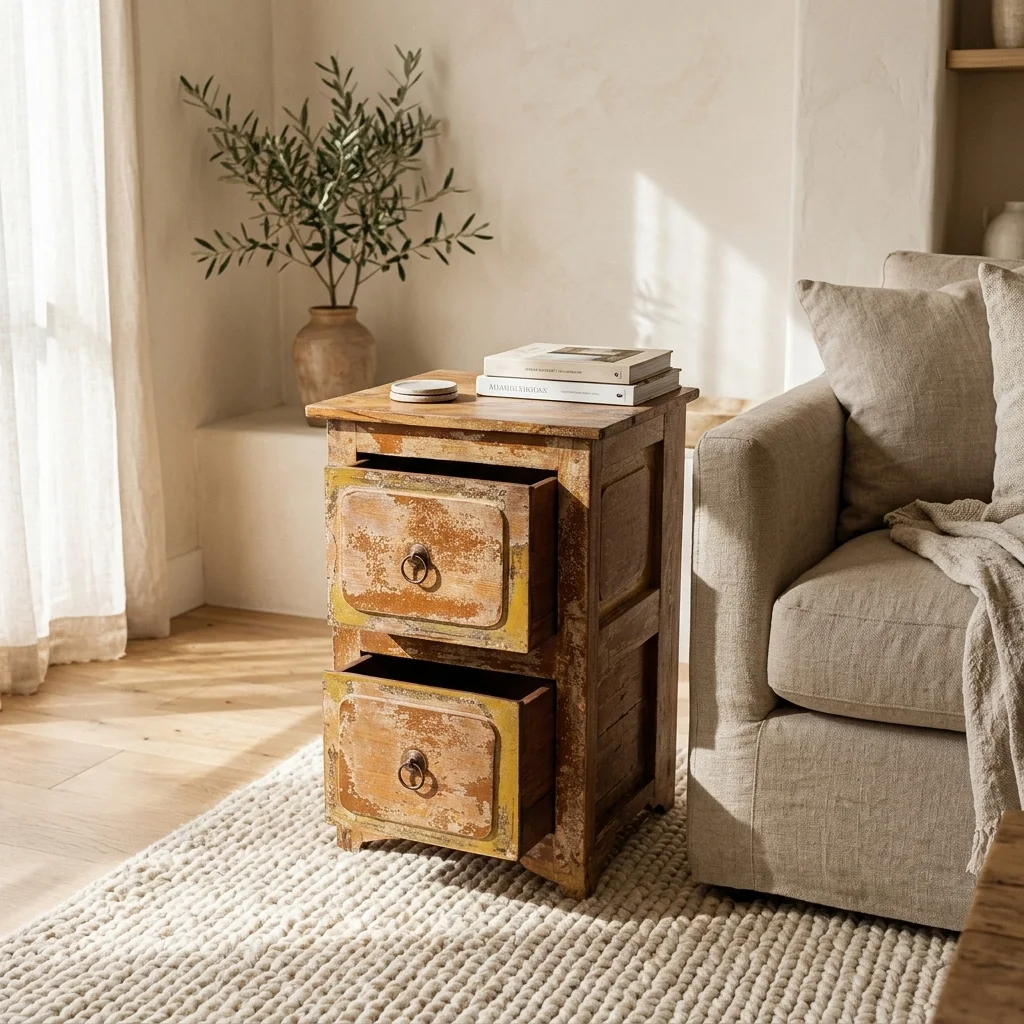
In contemporary interior architecture, the relentless pursuit of sleek surfaces and engineered finishes can inadvertently leave a living room feeling clinical. Cozy spaces require an emotional counterweight—tangible evidence of human craft, material honesty, and the calming presence of time. Authentic rustic wooden chests, patinated consoles, and hand-beaten brass or forged iron hardware provide precisely this textural counterbalance.
Unlike mass-manufactured veneer casework, genuine solid timber trunks and consoles bear micro-histories in their surfaces: hand-planed irregularities, natural fissures stabilized with butterfly keys, subtle chisel chatter, and organic color gradients created through hand-rubbed wax finishes. When juxtaposed with clean architectural lines, plush bouclé upholstery, or architectural linen drapery, a handcrafted storage chest immediately creates a layered, collected atmosphere rather than a showroom facsimile.
A common misstep in interior styling is relegating heirloom-style chests exclusively to the foot of a bed. In an inviting lounge or open-plan living room, these pieces serve as functional focal points that ground seating clusters and resolve challenging circulation zones.
Using a solid wood chest as a central coffee table brings an architectural presence to seating arrangements. For optimal ergonomics and comfort, maintain a clearance of 14 to 18 inches (35 to 45 cm) between the edge of the chest and your sofa or lounge chairs. This preserves unobstructed flow while ensuring drinks or books remain within comfortable arm’s reach.
When selecting a chest for this purpose, consider surface stability and proportional height. A piece like the Distressed Wooden Chest sits at an ideal low profile—ideally matching or resting 1 to 2 inches below the sofa's seat cushion crown. Its flat, seasoned top supports decorative trays effortlessly while hiding throws, board games, or seasonal accents beneath its sturdy lid.
In open-concept residences where the back of a sofa faces an entrance or dining zone, a low-to-medium chest functions as a striking visual barrier. Placing an Aged Wooden Chest, Double Drawers, Vintage Storage behind a floating three-seater establishes a secondary horizontal plane that prevents the sofa back from feeling bare. The functional drawer arrangement provides everyday storage for remotes, coasters, and charging cables, keeping surfaces serene.
Awkward alcoves, under-stair spaces, and bay window recesses often fall victim to over-furnishing or total neglect. An ornate trunk transforms these dead zones into destination areas. Pairing an Antique Wooden Chest With Detailed Carvings with a reading chair, a matte brass floor reading lamp, and a tall ceramic floor vessel creates an intimate corner that naturally draws the eye through the room.
Cozy interiors rely on sensory contrast. If every surface is soft, the room feels unstructured; if every surface is hard and timbered, the space reads as cabin-heavy. Successful styling balances rustic woodwork with complementary metals and textiles.
The organic warmth of aged teak, sheesham, and mango wood pairs naturally with non-lacquered metals. Brass pulls, hammered iron strapwork, and exposed hasps introduce reflective highlights that catch evening ambient lighting. To introduce an unexpected tonal layer, consider a patinated painted piece such as the Antique Blue Iron Chest, whose cool mineral undertones cut through warm honey and espresso woods, introducing depth to bohemian or modern rustic living spaces.
To keep heavy wooden silhouettes feeling welcoming rather than imposing, temper their edges with tactile fabrics:
When decorating the top surface of a rustic chest or console, avoid symmetrical arrangements, which can appear rigid and formal. Instead, employ the asymmetrical triangular composition favored by editorial stylists.
Leave at least 30 to 40 percent of the chest's top surface open. Negative space honors the hand-waxed timber grain and prevents a functional home piece from feeling like a crowded curiosity cabinet.
Solid reclaimed hardwood trunks are substantial architectural elements. Understanding their physical footprint prevents installation headaches:
Handmade furniture crafted from seasoned Indian hardwoods responds dynamically to its surrounding environment. Protecting your investment requires simple, consistent care routines rather than heavy chemical polishes.
Maintain your living room’s relative humidity between 40% and 55%. Wood is hygroscopic; placing solid timber chests directly adjacent to active heat sources—such as cast-iron radiators, wood-burning stoves, or forced-air registers—can lead to localized shrinkage or checking. Keep at least 3 feet (1 meter) of distance from intense heat sources.
Avoid silicone-based aerosol furniture sprays, which create a synthetic film that suffocates the wood grain and ruins authentic patinas over time. Instead, dust weekly using a soft microfiber cloth or a natural bristle brush to clean detailed carvings. Once or twice a year, apply a thin coat of high-grade natural beeswax paste in the direction of the wood grain, allowing it to rest for 15 minutes before buffing gently with a dry cotton cloth.
A living room that embraces rustic authenticity invites people to linger, touch, and rest. By anchoring your room with a thoughtfully proportioned chest, framing it with soft ambient light (2700K warm bulbs), and embracing the lived-in beauty of hand-carved details, you create an interior that stands gracefully apart from fleeting decor trends.
Whether you are designing a high-traffic family sanctuary or curating a boutique residential project, explore our complete catalog of handcrafted storage chests, custom consoles, and architectural elements at ArtisansJodhpur, or reach out to our trade team for bespoke specifications.
Browse our handcrafted Jodhpur catalog or message our workshop for exact dimensions, finish photos, and export quotes.

