
Shopping Cart

Explore the historic joinery, deep-relief carving, forged ironwork, and multi-layered hand-rubbed patinas that define Jodhpur's heirloom mirrors and architectural decor.
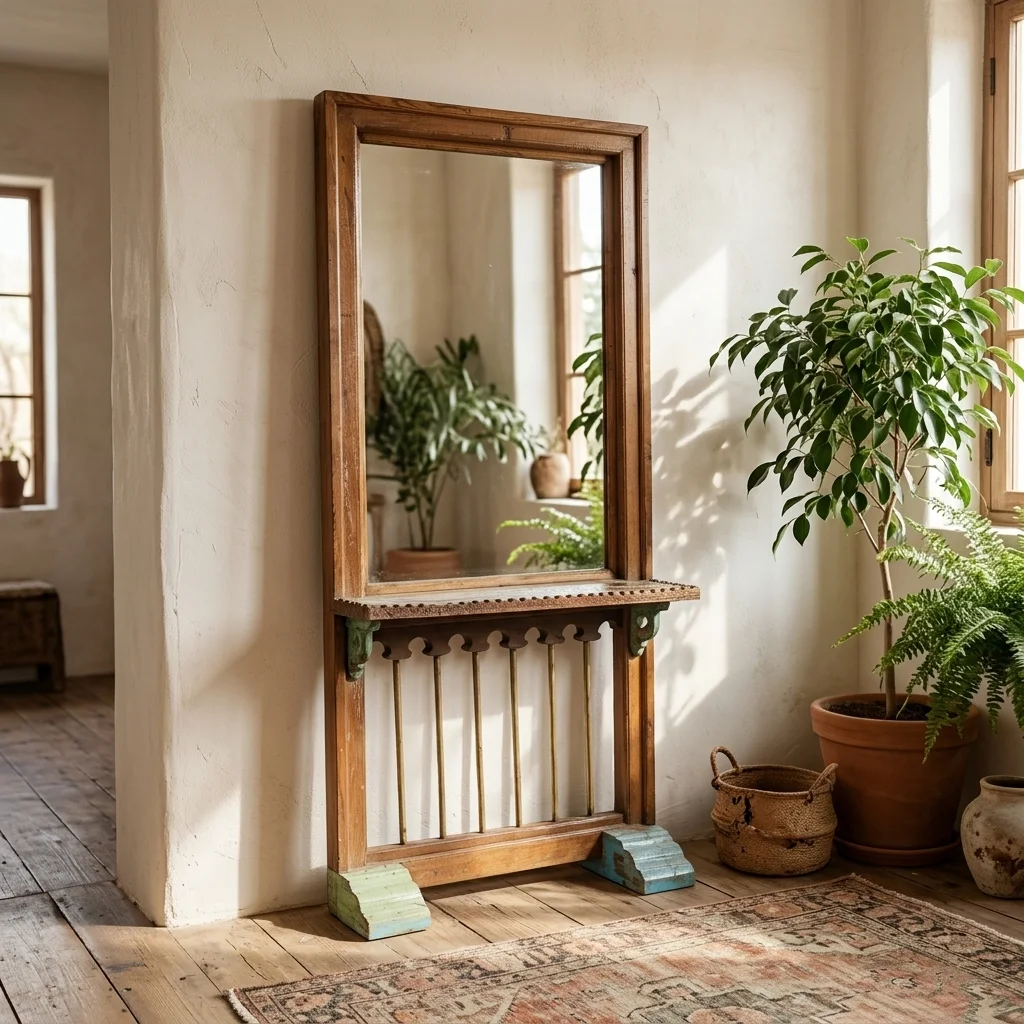
In the arid heart of Rajasthan, Jodhpur has spent centuries standing as a strategic crossroad of trade, royalty, and artisan guilds. While the city's blue lime-washed quarters and sandstone bastions capture international imagination, its inner courtyard workshops preserve an equally remarkable living tradition: architectural woodcraft. Unlike the rapid, CNC-milled decor flooding contemporary retail channels, traditional Jodhpur woodworking remains an intensely physical, tactile discipline. Here, master carpenters—often tracing their lineages back through generations of the traditional Suthar woodcarving communities—transform raw, seasoned timber into architectural statements built to endure for decades.
Understanding heirloom furniture requires examining the exact hands, tools, and processes behind every surface. From hand-forged iron reinforcements and chip-carved friezes to the deliberate layering of natural pigments and beeswax, the craftsmanship of Jodhpur represents a dialogue between durable raw materials and centuries-old finishing techniques. For interior designers, collectors, and trade buyers worldwide, these objects are not mere decorative items; they are structural artifacts that infuse modern interior envelopes with historical weight, sensory texture, and irreplaceable artisanal character.
At the center of Jodhpur's decorative legacy lies the art of relief carving. Carvers rely primarily on dense Indian hardwoods—notably seasoned Sheesham (Indian rosewood), resilient Mango wood, and reclaimed architectural Teak salvaged from historic regional structures. Because these timbers possess dense grain profiles, they demand absolute mastery over traditional hand chisels (rukhani) and wooden mallets.
The carving process begins not with a computerized template, but with charcoal tracings applied directly to the planed timber. Artisans differentiate between two foundational methods:
Hand-carved woodwork carries natural micro-variations. The bevel of an artisan's cut varies slightly with the density of the wood grain, creating subtle organic shifts across the piece. It is precisely these tactile deviations from mechanical uniformity that signal authentic heritage production to experienced interior curators.
Woodcarving in Jodhpur does not exist in isolation; it has historically developed alongside architectural metallurgy. Centuries of desert fortifications, palace gates, and merchant havelis required timber structures to be reinforced against desert winds, wear, and structural load. This historic necessity gave rise to an enduring design vernacular where hand-forged metal accents serve both decorative and load-bearing functions.
Local blacksmiths work in concert with carpenters, hand-hammering malleable wrought iron on open anvils. Among the core metal elements integrated into heirloom decor are:
Perhaps the most misunderstood aspect of Jodhpur decor is its finishing methodology. High-volume industrial furniture manufacturers rely on polyurethane clear coats and automated spray booths, creating an impenetrable plasticized film that hides the wood's breath and grain. In contrast, authentic Jodhpur finishes are built by hand through progressive, multi-step layering that celebrates the timber's natural texture.
After final hand-sanding, timber surfaces receive natural mineral pigments, water-based stains, or traditional lime washes. For pieces intended to showcase a distressed or bleached aesthetic, artisans apply a breathable chalk or milk-paint wash. This fluid layer penetrates deep into open grain pores and carved crevices while clinging lightly to flat surfaces.
True distressing is not random damage; it is an informed simulation of natural generational wear. Artisans carefully rub back the initial pigment coats using pumice blocks, wire brushes, and multi-grit sandpapers. Attention is paid to natural wear zones: projecting carving edges, outer frame corners, and raised moldings. The result reveals underlying wood tones and secondary base stains, producing an authentic, layered visual history that synthetic spray-on finishes cannot replicate.
Rather than sealing the surface under synthetic lacquer, heirloom Jodhpur woodwork is sealed with boiled linseed oil or hand-rubbed beeswax paste. Applied with dense cotton cloths and buffed vigorously by hand, natural wax fills the wood pores without suffocating them. This leaves a tactile, low-luster satin sheen that highlights grain definition while allowing the wood to gently respond to ambient indoor humidity.
While the craftsmanship originates from historic Indian design languages, Jodhpur woodwork integrates seamlessly across a wide spectrum of international interior styles—from Mediterranean and Modern Farmhouse to Wabi-Sabi and Transitional Eclecticism. The secret lies in treating substantial handcrafted pieces as architectural anchors rather than mere accessories.
Entry halls set the emotional and tactile tone for the entire residence. A multifunctional, architectural statement piece such as the Decorative Hall Stand With Mirror introduces immediate scale, tactile warmth, and practical utility. Pair it with limewashed walls, natural stone flooring, and unlacquered brass lighting to let the depth of the carved wood stand as the room's primary focal point.
In modern interiors characterized by clean lines, drywall, and polished concrete, spaces can occasionally feel cold or visually flat. Introducing a single carved mirror frame or a reclaimed-wood console provides essential sensory contrast. The textural complexity of hand-chiseled relief carving breaks up planar monotony, grounding sleek modern fixtures with historical craftsmanship.
Heirloom-grade solid timber furniture requires thoughtful care, especially when transitioning from the dry climate of western Rajasthan to residential heating and cooling environments across North America, the UK, Europe, or Australia.
In an era dominated by disposable, flat-packed furniture, choosing handcrafted Jodhpur woodcraft is an investment in human skill, material longevity, and cultural heritage. Each chiseled leaf, hand-forged nail, and hand-rubbed wax finish preserves an unbroken lineage of Marwar craftsmanship. Whether you are curating a private residential sanctuary or sourcing signature architectural statements for boutique hospitality projects, these pieces bring tactile integrity, timeless beauty, and authentic soul into every curated interior.
Browse our handcrafted Jodhpur catalog or message our workshop for exact dimensions, finish photos, and export quotes.

